Wednesday, May 9, 2012

My Feet Hurt!! Top Ten Things Relieve Foot Pain Today...

My Feet Hurt!


Top Ten Things 
To Relieve Foot Pain Today...


The following advice may not be popular but it is highly effective! 
It's straight forward, common sense medicine and --
it sure beats surgery! 

Give it a try and I would love to hear how it works for you...


1.

Stop Walking Barefoot.
Forget about what people say about being barefoot being "natural" -- being naked is "natural" but we all wear clothes to protect our bodies from the elements.
It's wise to protect your feet also. 
There's nothing "natural" about walking around on concrete all day!
Plus, if your feet weren't hurting, 
you wouldn't be reading this.


2.

Stop Wearing Flip-Flops.
Zero biomechanical control.
Try an experiment -- have someone video you on their cell phone from behind as you walk barefoot or wear flip-flops.
Now video you doing the same thing while wearing proper shoes with arch support.
Pay attention to what is happening to your feet, ankles and knees.
Not pretty, is it?
Lots of extra wear-and-tear on your joints, muscles and tendons.  
Remember, you're either beating up your feet -- 
or you're beating up your shoes.
If you think what you're shoes look like after several years of wear, 
what do you think is happening to your joints?


3.

Stop Walking Around the House Wearing Only Socks.
Minimal protection!
Zero biomechanical control. 
Although I do recommend wearing socks with shoes, if you are walking around the house in only socks -- that is only slightly better than being barefoot. 


4.

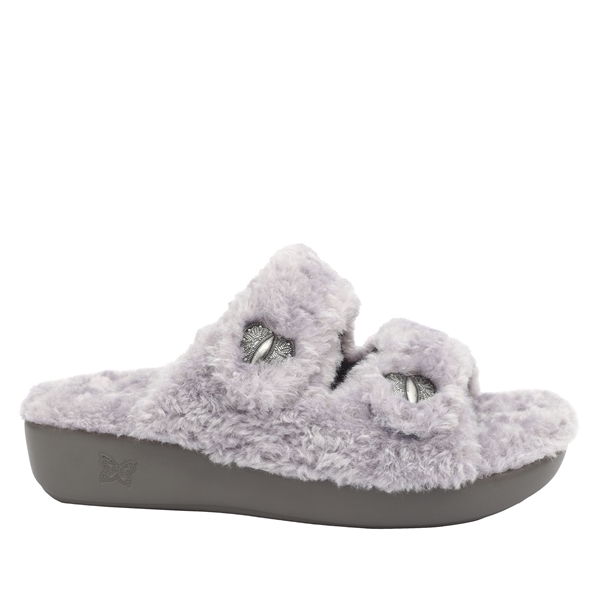
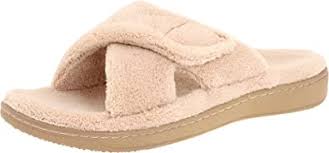
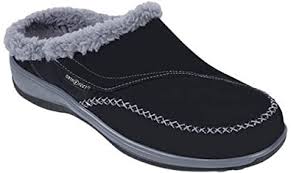
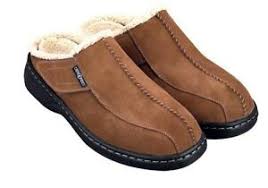
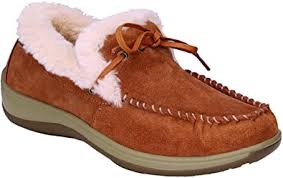
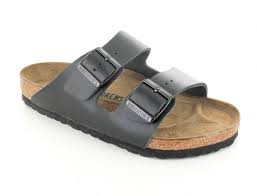
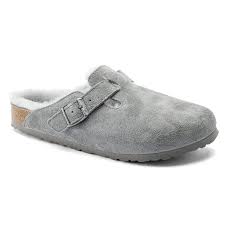
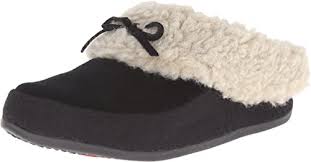
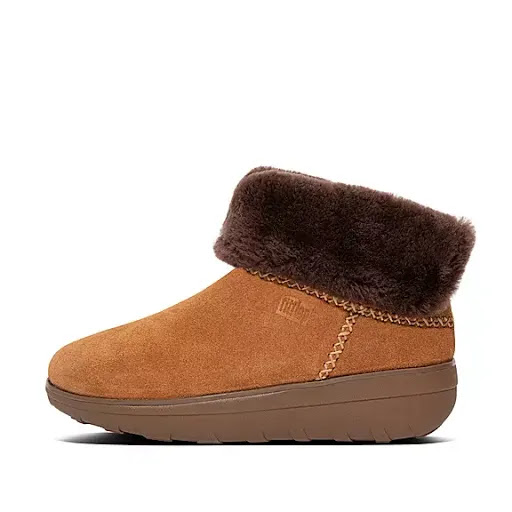
Stop Wearing Flimsy Bedroom Slippers.
If your slippers are flexible or bend too easily, 
you may be causing damage to your joints as well as setting you up for potential injury.
If you like to wear slippers in the house, 
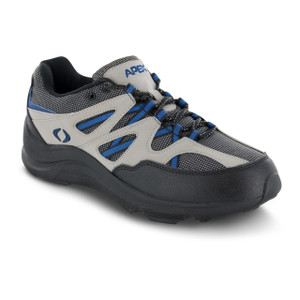
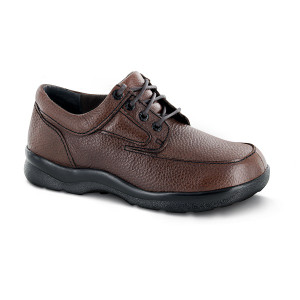
at least look into getting"Diabetic Slippers" 
even if you are not diaabetic. 
These slippers offer more protection and are probably ten times more comfortable. 
Foot Solutions has a great Diabetic Slipper 
and you can find many others online. 


5.

Around the house - as a bedroom slipper - 
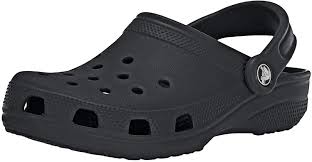
wear Crocs RX clogs 
with the strap to the back.
Do you have heel pain? 
Knee, hip, lower back pain?
This is the cheapest and best medical advice you will ever get!!
If you wear Croc Rx Clogs with the strap to the back around the house, you will probably have a significant improvement 
in a very short period of time. 
The only time you should be barefoot and standing is in the shower!


6.

For a great Walking Shoe - 
go to a New Balance Store and purchase a 
New Balance Walking Shoe 
with Roll-Bar Technology 
and a wide base with an extra-depth toebox.
I often write my patients prescriptions for this shoe, which can make it taxdeductible and give them a 10% discount at any New Balance store. 
I truly believe that proper shoes are medically necessary for many patients because it will decrease pain, risk of injury and prevent surgery. 
Not to mention make your life more pleasant because you will have less pain and you can concentrate on staying active and having fun!


7.

Elevate and Rest Your Feet 
and use a topical pain reliever like: 
Biofreeze or Traumeel -
both are over-the-counter and safe. 
Don't underestimate the power of rest!
As a physician, I am always amazed at the body's healing power so --
at the end of the day, 
grab a good book and put those feet up... 


8.

Wear Arch Support.
Either Custom-Molded Orthotics or 
a good Over-The-Counter Insert
which you can purchase from your local Podiatrist or your local running shoe store.  
Ten percent of people cannot tolerate arch support, which means you have a ninety percent chance that arch support can improve your life.
I wish Las Vegas had those odds! 
Good arch support can also significantly help with knee, hip and lower back pain.
I've had patients say, 
"I have high arches -- I don't need arch support"
and my response is, 
"Bridges often have high arches but they still put struts under them for more support."
It's the same with your foot -- 
support under the arch means less strain on the joints, tendons and muscles.


9.

Wear Diabetic Socks 
for extra cushion 
and comfort. 
It sounds silly but I've been to lectures entitled "Current Technological Advances in Socks &
Sock Strategy."
Proper socks can decrease friction and thereby decrease calluses, corns, blisters and 
heel fissures. 
Diabetic socks may cost a couple dollars more but hopefully will be well worth it! 


10.

Make an Appointment with your 
local Podiatrist!
Try to find a Podiatrist that specializes in conservative, non-surgical treatment. 
In my opinion, less than five percent of patients with foot pain need surgery. I am not referring to foot "procedures" that can be done in the office such as fixing ingrown toenails -- I am referring to more serious surgeries such as bunions and fusions of joints that will permanently change your foot and ankle biomechanics.
Foot surgery is more than you think!
The foot heals slower, hurts more, and swells more because while you are trying to heal it -- 
you are walking on it!
Not to mention, recovering from foot surgery poses many risks and the results are never guarenteed.
I always tell my patients that 
the goal of surgery is 
to take an "abnormal painful foot" and turn it into an "abnormal non-painful foot."
The only time you should consider having foot surgery is if you have tried everything and completely exhausted conservative treatment and you still cannot perform your normal daily activities because of the pain.
Before you have foot surgery, please get a second or even third opinion!
 Most biomechanical foot pain can be resolved using conservative, non-surgical treatment. 


***


For more information, 
please see the article on this blog for:

Shoe Recommendations for Patients Recovering from Lisfranc's Injuries.
(Continue to Scroll Down)


On this Blog, you can also look up:


Top Ten Comfortable Sandals
Top Twenty Comfortable Dress Shoes
Top Five Comfortable Walking Shoes
Top Twenty Womens Comfortable Boots


Please feel free to explore the blog!
I have lots of information, articles and shoe recommendations for people who suffer from foot pain.


Have a Great Day!

Dr. Cathleen A. McCarthy


:)


Saturday, April 14, 2012

Podiatrist Shoe Recommendations for Patients Recovering from Foot Fractures...

Shoe Recommendations 
For Patients Recovering From
Lisfranc Injuries...
(As well as any Sprain or Fracture of the Foot)


I know this sounds terrible but 
I love treating fractures...

I enjoy treating patients with fractures because:

1. On the 1st visit, patients will leave the office in significantly less pain than when they walked into the office using simple non-painful conservative treatment. 

2. Once the fracture is healed - we focus on getting patients into proper shoegear, arch support and possibly bracing so they can get back to doing all the activities they enjoy! 

I love my profession because I have the opportunity of helping people heal from foot and ankle injuries and get back to their lives.
Over the years, I have discovered that if patients follow the recommendations below - our success rate is amazingly high!


LISFRANC'S INJURIES.

So, let's talk about Lisfranc Injuries...
The Lisfranc Joint (also known as the Mid-Tarsal Joint) is in the midfoot and, in my opinion, it is the most common foot injury. 
Although it can be caused by direct trauma (and if that happens - you are going to the Emergency Room and possibly having surgery), I find that the wide majority of Lisfranc Fractures or Sprains are caused by an often minor twisting of your foot on a stair or curb and, if you happen to be barefoot, wearing flip-flops or a shoe that bends through the midfoot area - there is a very high probability that you are going to break a bone or pop a ligament.  

I see this type of fracture every single day
One day last week I saw four Lisfranc fractures before lunch. The amazing thing was not one of them knew how they did it!


In my opinion, this fracture is caused by taking a
wrong step in a crappy shoe!
And it's not you're fault because 
80% of shoes out there are crappy 
and there is tons of misinformation about what makes a good shoe...

One of the main reasons I started the blog was because of my frustration with all of the misinformation about shoes.
I'm passionate about this topic because I have spent the last twelve years in private practice striving to help people heal foot injuries and get back to their lives.


So...
These Rules Are Stringent 
BUT
You ARE Recovering from a Foot Fracture
and you need to protect your foot!
You went through a lot of pain and time in "the boot" or on crutches to take the chance of wearing bad shoegear and re-injuring...


So...


THE RULES 
FOR WHEN YOU ARE RECOVERING FROM A FRACTURE OF THE FOOT:

1. No barefoot! 
Ever. 
The only time you are barefoot and standing is in the shower. 
2. No Flip-Flops. 
I don't care how "good" they say the flip-flops are - they're not. 

3. No Walking Around the House Wearing
Only Socks.
 Zero biomechanical protection. 

4. No Flimsy Bedroom Slippers.
Any slipper that bends or flexes is garbage.

5. As a bedroom slipper around the house - wear Croc RX Clogs with the strap 
in the back.  
As soon as you get out of the shower, dry yourself, put on your Crocs.
If you get up in the middle of the night to go to the bathroom, when you get out of bed, straight into your Crocs and off you go.
Yup, the strap MUST be to the back. 


IF YOU ARE RECOVERING FROM A FOOT INJURY / FRACTURE / SPRAIN 
ANY SHOES THAT YOU WEAR 
MUST HAVE:

1. A Thick Rigid Sole
If you can bend or flex it - it is garbage.
Put some muscle into it, please - no wimpy "bends"...

2. Arch Support
Whether it is Custom-Molded Arch Support or an Excellent Over-The-Counter Insert - you need arch support.
Unless you are one of the 10% of people who can't tolerate arch support in which case, do not wear arch support. 

3. A Wide, Soft Square Toebox. 
Google: Extra-Depth Shoes and there are many brands of shoes that have extra-depth for the toes.
No cock-roach kickers, please -- they are bunion factories. 

4. Rearfoot Control. 
Every single shoe MUST have rearfoot control. 
If you are not biomechanically controlling the rearfoot - you are not controlling the mid-foot - which will lead to more chance of re-injury, pain, strain as well as knee, hip and lower back mechanical strain. 
To stay in a backless shoe, you are gripping your toes down when you walk. There are tendons that start below the knee and go all the way down to your toes - they are also passing through or connecting into the bones that make up the Lisfranc's Joint and a biomechanically uncontrolled rearfoot equals more strain, more pain and more chance of re-injury. 


ONE "SHOE DAY"
IN  THE LIFE OF SOMEONE RECOVERING FROM A LISFRANC'S FRACTURE
(Any midfoot fracture or Injury)


 6am
Good Morning!
 I have to let the dog out so I guess I'll get out of bed and right into my Crox RX Clogs 
(making sure that the strap is to the back) and let the dog out. She's fascinated with the Geckos and Hummingbirds...

6:30am
Exercise
I'm going to put on my Diabetic socks (even though I'm not diabetic), my Tri-Lock Brace, which I got from my Podiatrist and I use when exercising (for at least 6-12 months after a Lisfranc's Injury) and I'm going to put on my 
New Balance walking shoes so I can take my dog for a thirty minute walk. 
Luckily, my Podiatrist sent me to the New Balance store and gave me a prescription for:
RX:
New Balance Walking Shoes
with Roll Bar Technology and
a wide base for more stability
(Because it's an RX and medically necessary it should make them tax deductible...)


9am
Work
My foot feels pretty good so I don't need to wear my brace to work today -- but I'm going to take my Tri-lock brace to work so that if my foot hurts I can put it on. 
I went to Dr. McCarthy's blog and found the search box (top right hand corner) and searched for:
"Top 20 Women's Comfortable Dress Shoes"
and found a great shoe for work. 
I wrote down what I liked and went to the store to try them on -- my brace fit into some of them but not all so, in the early days of recovering from my injury, I wore the chunkier shoes with my brace and once I was further along in the healing process, I didn't need my brace anymore. 
Anything on this list would be fine with someone who has healed from a foot fracture
because I know all of these shoes meet her criteria on that stringent list from her blog...


2pm
Go Play!
Wow, I can't believe it! Work shut down early and now I can go do whatever I want! 
Let's look and my options...

Beach:
I'm going to wear my Amphibious Teva's or Chaco's (with a rearfoot strap) whether I am on the sand or in the water because it'll be more comfortable and I'll have more fun. 

Water Aerobics
Am I going to do water aerobics barefoot? 
Oh heck no! 
My Pod told me she sees a surprising number of fractures from women bouncing around in the swimming pool -- I think I'll wear my Amphibeous Teva's (with rearfoot strapping). Right after I was recovering from my foot fracture, I had to wear a pair of New Balance Walking Shoes with Roll Bar Technology and a wide base (for more stability) in the pool


Hiking
I didn't like any of the hiking boots Dr. McCarthy featured on her blog so I went to REI and I picked out a boot I liked but I made sure that the sole didn't flex or bend. The salespeople must have thought I was crazy because I walked around -- bending and flexing all the shoes before I tried them on. I then picked a great boot that felt the best on my foot and met all Dr. McCarthy's criteria for proper shoes. 
She told me that no matter what she says, 
I'm the acid test. 
 If I try on a shoe and it's not comfortable -- 
I don't get it. 
Yoga
I don't care what anybody thinks! 
I went through too much to get my foot healed to risk re-injuring it by being barefoot so I am going to wear my New Balance walking shoes with Roll-Bar Technology and a wide base
I love Yoga and I want to keep doing it so 
Dr. McCarthy wrote me a prescription that I gave to my Yoga studio that says it's medically necessary for my to wear my shoes in class. 

7pm
Home at Last!
I used to not want to wear my Croc RX Clogs around my husband because I thought they were goofy but, guess what -- I got him in Crocs Rx around the house and he had the following benefits:

1. 
30% Improvement in knee, hip and lower back pain within 3 weeks.

2. 
We saved a truckload of money in medical bills - everything from foreign bodies, warts, tendonitis, fractures, heel pain, calluses, ect.

3. 
His feet are prettier! 
Turns out that kooky Dr. McCarthy was right! She said, "You're either beating up your feet or you're beating up your shoes -- think what your shoes look like after a couple of years -- that's what's happening to your joints."


10pm
Good Night!
I'm so glad that my day tomorrow doesn't include going to see my Podiatrist! 
We got the fracture healed and as long as I do the right things when it comes to protecting my feet, 
I don't need to see her. 
I can live my life and have fun!

Gee, 
I wonder why a Podiatrist would be giving out advice that would decrease her business?
 Hmm, I wonder if it's because she figures it's a better marketing plan to fix people's foot problems and then protect their feet with proper shoes so they don't need to keep constanly coming back and she gets new clients from "Word of Mouth" referals from happy patients? 
That must be it...


Have a Great Day!


Dr. Cathleen A. McCarthy

:)


Sunday, March 25, 2012

Podiatry Recommended Dansko Sandal for Narrow Feet...

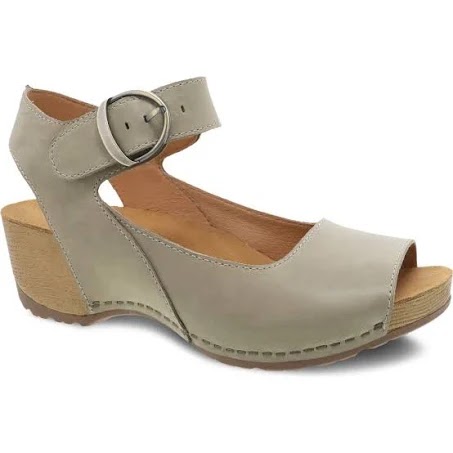
Dansko Dani Carmel 

***

A Great Sandal for Women with Narrow Feet...


This is a wonderful sandal for those of you that have narrow feet. I have been recommended Dansko shoes for years and the Dansko Clog is the shoe that helped me to survive the long hours on my feet during my residency. 

What makes the Dansko brand great is the thick rigid sole that is protective of the foot. 
If you are recovering from a recent foot injury and making the transition into normal shoegear - 
this is a great sandal to help you ease into summer sandals. The forefoot, midfoot and rearfoot strapping helps create more biomechanical control for more comfort, less chance of injury and less mechanical strain.


This Sandal is Recommended for Patients with:

*Bunions
*Hammertoes
*Hallux Limitus/Rigidus (limited range of motion of the 1st toe joint)
*Osteoarthritis
*Rhuematoid Arthritis
*Metatarsalgia
*Capsulitis
*Morton's Neuroma
*Heel Pain (plantar Fasciitis)
*Tendonitis 
*History of Lisfranc Joint (MTJ) Injuries
*Sesmoiditis
*Tailor's Bunions 


This Sandal is NOT Recommended for Patients with:

*Diabetes
*Neuropathy (Nerve Damage)
*Peripheral Arterial Disease
*History of Foot Ulcerations 
*Charcot Foot
*Foot Drop


**Please remember that you are the acid test for whether or not the shoe works for you. You should not have to "break in" shoes. If this shoe is not comfortable - it's not for you!


Hope this has been helpful!


Dr. Cathleen A. McCarthy 


:)

Saturday, March 24, 2012

Podiatrist Recommended Women's Sandals for Spring 2012


Podiatrist Recommended
Women's Sandals for 
Spring 2012

***


Aravon Katy
$134


This is a great sandal that can be found at most New Balance stores. The thick rigid sole offers maximal protection to the foot and I love the soft footbed, which offers decent arch support. The forefoot, midfoot and rearfoot control offers biomechanical control, which helps decrease pain, chance of injury and mechanical strain.


 Naot Jive 
$107

Gotta' love the Naots! A bit more of a casual look but the rigid sole combined with the soft footbed and solid forefoot, midfoot and rearfoot strapping is great for biomechanically controlling for the foot, which dramatically improves comfort to not just the foot - but also the knees, hips & lower back. 


 Wolky Cloggy
$169

The Wolky line of shoes offers high quality shoes with excellent biomechanical control for the foot and ankle. One of my favorite aspects of this sandal is the thick rigid sole that is protective of the joints. The footbed is soft and has fabulous arch support. It's an expensive sandal but consider it a solid investment in your foot health!


Alegria Kleo
$108


I'm a big fan of all of the Alegria shoes that have rearfoot strapping! Don't be fooled and get the shoes or sandals that don't have rearfoot strapping or control - you will be cheating yourself of comfort. This sandal has an awesome thick and rigid sole with a soft footbed with good arch support. As long as you also have rearfoot control, this sandal will increase comfort, decrease chance of injury and cause less "wear and tear" on the foot and ankle joints.


These Four Sandals ARE Recommended for Patients with:

*Heel Pain
*Osteoarthritis
*Rheumatoid
*Hallux Limitus (Limited Range of Motion across the 1st Toe Joint)
*Morton's Neuroma
*Mild to Moderate Hammertoes
*Metatarsalgia
*Mild Tailor's Bunions
*Mild Bunions
*Mild Achilles Tendonitis
*Tendonitis
*Fibroma's on the bottom of the foot
*Flat Feet
*Hypermobility (Ligament Laxity)
*Corns & Calluses
*Ingrown Toenails


These Sandals are NOT Recommended for Patients with:

*Diabetics
*Neuropathy (Nerve Damage)
*Peripheral Arterial Disease
*History of Ulcerations 
*Charcot Foot 
*Severe Ankle Instability 


Hope all is well,

Dr. Cathleen A. McCarthy 

:)


Monday, February 6, 2012

Effectively Treating Toenail Fungus Requires Treatment of Shoes...

Proper Treatment of 
Fungal Infections of the Feet, 
Whether Skin or Toenails, 
Requires Proper Treatment of Your Shoes. 

This is a bit off my usual topic of reviewing shoes but
I thought - as long as I am encouraging you to invest in proper shoes - it would be appropriate to spend some time on discussing the proper care and treatment for your shoes if you are trying to rid yourself of a fungal toenail or skin infection.

If you do have a fungal toenail infection or suffer from a chronic athelete's foot infection 
(also fungal) - it is impossible to clear up the toenails if you do not clear up the skin infection and vice versa. 
More importantly,  
even if you do clear up those infections, if the shoes are not properly treated also, 
there are fungal spores that have been shed in your shoes and threaten to "break open" and re-infect your skin and toenails months after the infection has cleared. 

Scary Mary. 
What to do?? 

Well, here are my comprehensive recommendations for clearing toenail and skin fungal infections permenantly:

1. 
Stop walking barefoot! 
This will greatly decrease the chance of picking up fungal as well as viral infections such as warts. Not to mention foreign bodies, ect. 
Wear Croc Rx clogs around the house with the strap to the back for more biomechanical control.

2. 
When you do wear shoes - follow the
four rules of proper shoegear: 
thick-rigid sole, 
arch support, 
wide, soft square toebox 
and firm rearfoot control. 

A wide toebox is important because a tight toebox applies pressure to the toenails, which causes injury to the toenail (onychauxis) which is what sets out the "welcome mat" for setting up fungal infections of the toenails. 
Injury
even if it is constant repetitive micro-trauma to the toenails from a tight toebox or a flimsy sole on the shoe that allows too much motion through the forefoot area - will cause the onychauxis that sets up a perfect environment for a fungal infection to start. 
The typical presentation for a patient with fungal toenails is, 
"I dropped something on my toe and now it's thick and discolored." 
Injury = Fungal Infection. 
Protect the toenails!

3. 
Spray your shoes every morning before putting them on with an 
over-the-counter topical anti-fungal spray 
such as Lamisil or Tinactin. 
You don't have to break the bank - 
a good spray may cost anywhere from 
four to ten dollars.
Bowling Alleys use Lysol spray, which is also effective. 
You can also use over-the-counter anti-fungal powders but I have been informed by several of my patients who are Shoe Repair Professionals that powders will decrease the lifespan of your shoes as they tend to "build up" within the shoe and break down the sole quicker. 

4.
Avoid wearing the same shoes every day. 
Try to switch off shoes every other day to allow the shoes a full twenty-four hours to dry out. Fungus loves a moist, dark, warm environment, which is basically inside a shoe after a long day's wear.

5. 
Cedar Shoe trees that you place within a shoe helps to absorb the moisture and keep the shoes dry. There are other over-the-counter ultra-violet products that help to treat shoes while you are not wearing them and for a severe infection, they may prove useful.


6.
If you have a chronic infection of your feet and/or toenails and nothing clears it up - 
if you've tried everything and nothing works - 
it's probably not a fungal infection! 

 Follow up with your Podiatrist. 
In the worst case scenario, we can take a biopsy and send it out to a Pathologist to look at under a microscope and tell us what it is so that it can be properly treated. I rarely have to do this but it is always an option. 
It could be Psoriasis, Eczema, Dermatitis and any number of other skin conditions that are commonly mistaken for 
an athelete's foot infection. 
The same thing goes for the toenails - it is very easy to trim off a piece of the toenail and send it to a pathologist for what is called a KOH and PAS test to confirm the diagnosis of a fungal infection. There are many conditions that mimic a toenail fungal infection and, unless it is properly identified, it is hard to properly treat it. 


7.
Talk to your Podiatrist about treating your toenail and skin fungal infections. 
Whether you choose to use oral antifungal prescription medication (i.e. Lamisil), topical antifungal prescription medications (i.e. Penlac), over-the-counter antifungal medications (Formula-Three) or homeopathic remedies such as white vinnegar, tea tree oil or Vick's Vapor rub - 
use something!
Your Podiatrist will be able to discuss the pros and cons of each type of treatment and together you can decide what is best for you.


8.
The "Golden Rule" with fungal foot infections: 
If you don't treat it, it won't get better. 
If you do treat it, it probably will get better." 

So...

Go to your Podiatrist or Dermatologist and get an accurate diagnosis of your foot infection - 
this will greatly skyrocket your chances of successful treatment!

Once you do start treatment, you must be "consistent and persistent" with any treatment plan and it should resolve. 


Hope this has been helpful!

Dr. Cathleen A. McCarthy


:)


Monday, January 23, 2012

Comfortable Women's Wedge Sandal - Earthies Salerno

EARTHIES SALERNO

love it...


This is a gorgeous shoe!

I love the Earthie shoe line - 
they are pretty and, in a world full of poorly constructed shoes, Earthies has consistently offered exceptional quality. 
This shoe is wonderful because of the rigid protective sole that offers more protection and comfort for the foot structures. 
What really wins me over is the contoured foot-bed with soft material and excellent arch support.
The strapping provides forefoot, midfoot and rearfoot control, which increases biomechanical control of the foot and allows for 
more comfort as well as less chance of injury and mechanical strain. 

This Shoe is Recommended For Patients with:
*Mild Bunions
*Mild Hammertoes
*Mild Tailor's Bunions
*Plantar Fasciitis (Heel Pain)
*Achilles Tendonitis


This Shoe is NOT Recommended For Patients with:
*Hallux Limitus/Hallux Rigidus (Limited or No Range of Motion across the 1st Toe Joint)
*Osteoarthritis or Degenerative Joint Disease of any of the Toe Joints (especially the 1st Toe Joint)
*Metatarsalgia
*Morton's Neuroma
*Capsulitis of the Toe Joints
*Ankle Instability/Hypermobility
*Diabetes
*Peripheral Neuropathy (Nerve Damage)
*Peripheral Arterial Disease (Poor Circulation)
*Charcot Foot
*History of Ulcerations
*Dropfoot


If you are one of my patients or in 
the Scottsdale area, 
J. Stephens Shoes 
located in Kierland Commons carries 
the Earthie shoes. 

Check out their website at:

www.shoesjs.com

(I have no financial interests with them!)


***


Have a great evening!


Dr. Cathleen A. McCarthy


:)


Saturday, January 21, 2012

Comfortable & Stylish Man's Dress Shoe - The Dansko Theo

DANSKO THEO

Comfort & Style for Men.


Of course there is a story behind this shoe!

One of the Podiatry Students from Midwestern University School of Podiatric Medicine who has been shadowing me this month was wearing a lovely looking Echo dress shoe but I noticed that by the end of the day he was shifting around like his feet hurt. 
Although I recommended on several occasions for him to sit down and rest - he declined and continued standing for the entire day while we saw patients.

Foot pain is a common problem for third year medical students because they spend the first two years of school sitting and in the third year they are thrown into hospitals and expected to stand for long hours on hard surfaces.

When I was a third year Podiatry student, 
I spent a month shadowing a Podiatrist and my feet and legs were killing me! 
At one point, I was so desperate I asked the doctor if I could sit during his patient exams and he refused to let me! 
He advised me it was more professional if I remained standing - even though he was sitting!
 
I remember thinking that it was very odd that a Podiatrist - a person who has devoted his career  to foot care - would refuse to let me sit and I promised myself  that I would never do that to any students.

Anyway, the student shadowing me this month didn't want to sit - 
even when I encouraged him to do so  -
(am I that scary??)
He is an excellent student and I respect his tenacity but I hate to see him suffering.

So, he's had to listen to me talk biomechanics all day long to practically every patient for the past month and he showed up on Friday with the Dansko Theos. 

I am ashamed to say that I didn't notice at first but one of the office staff (my mother!) admired his new shoes and we checked them and they proved to have excellent biomechanical control. 

At the end of the day, the student said they felt fantastic and finally admitted that his feet had been killing him by the end of each day 
(I knew it! I have a sixth sense when it comes to foot pain...) 
and (yea!) he loved his new Danskos. 

He was surprised because he had spent significantly more money on the Echo dress shoes than on the Danskos but I reminded him that it is not how much money you spend - it is knowing what you are looking for in a shoe. 

The Echo was a great looking shoe but the 
forefoot sole on this particular shoe was thinner and far too flexible.

The Dansko Theo has a thick, rigid sole that does not bend, which allows for much more biomechanical control and therefore - less pain. 
It also has a good insert with decent arch support (it can be removed to accommodate a custom-molded orthotic if needed) as well as a wide toebox and great rearfoot control.

Echo is a wonderful shoe line and has many excellent shoes but, like every shoe line, it also has some stinkers. 

Hence, the whole purpose of this blog - 

finding good looking comfortable shoes that are pathology specific! 


Dansko Theo's are Recommended for Patients with:
*Mild to possibly Moderate Bunions
*Mild to possibly Moderate Tailor's Bunions 
*Mild to Moderate Hammertoes
*Metatarsalgia
*Mild Morton's Neuroma
*Hallux Limitus/Hallux Rigidus (Limited to No Range of Motion across the 1st Toe Joint)
*Recovery from any Injuries to the Foot - especially the forefoot or the metatarsals
*Mild to Moderate Tendonitis
*Maybe Mild Achilles Tendonitis (It will feel better with a Heel Cup in the shoe if you have Achilles Tendonitis)
*Mild Ankle Instability
*Hypermobility or Ligament Laxity
*Tired Leg Syndrone
*Mechanical Strain
*Mild Knee, Hip or Lower Back Pain


This Shoe is NOT Recommended for Patients with:
*Diabetes with history of Ulcerations
*Neuropathic Feet (Nerve Damage)
*Peripheral Arterial Disease (Poor Circulation)
*Charcot Foot
*Prominent "bumps" on the foot or an excessively high arch (Pes Cavus) - especially if you have an exostosis (bone spur) on the top of your midfoot area. This shoe may rub that area, which will cause irritation. 


Overall, I give this shoe a rating of 9
on a scale of zero to ten with ten being the best. 


Enjoy your day!

Dr. Cathleen A. McCarthy

:)
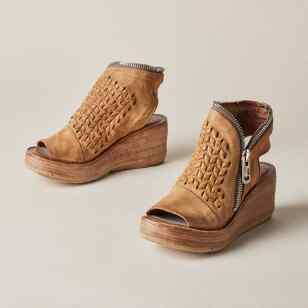
A special thank you to the student 
(you know who you are little grasshopper!) 
for providing me with the information that allowed me to do the review on the Dansko Theo!